

Alexandr Wang at the Helm of Meta’s $15 Billion AI Ambition: Will Artificial Superintelligence Be the Game-Changer?

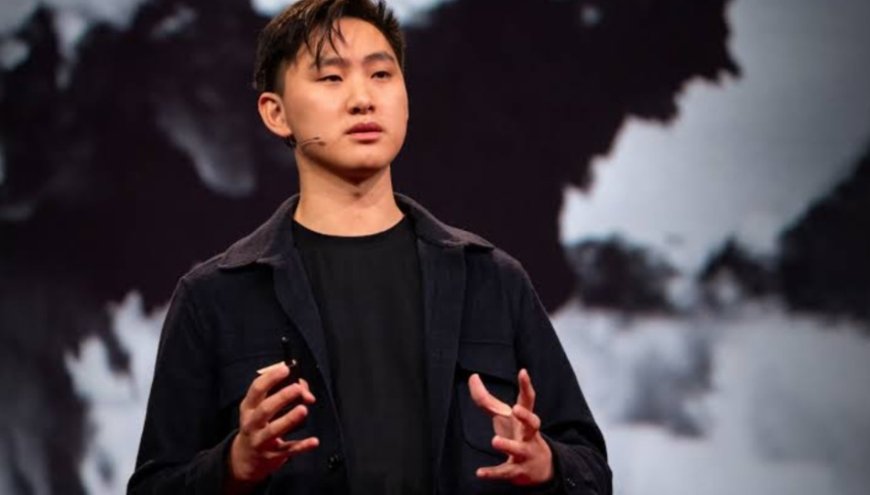
Meta is placing a bold bet on artificial superintelligence (ASI), and at the centre of this high-stakes play is Alexandr Wang, the CEO and co-founder of Scale AI. In a move that could reshape the future of the tech giant’s AI strategy, Meta has tapped Wang to lead a newly formed research lab, backed by a staggering $15 billion investment.
"Alexandr Wang finds himself at the centre of a potential $15 billion shake-up as Meta looks to regain its competitive edge. But is artificial superintelligence the answer?"
Wang’s startup, Scale AI, has grown into a crucial player in the artificial intelligence ecosystem. From enabling autonomous vehicles to training large language models (LLMs), Scale AI provides the data infrastructure that fuels AI advancements. "Over the years, Wang has built his startup into the backbone of the AI boom, quietly enabling everything from autonomous vehicles to large language models (LLMs)."
Meta's new ASI lab is expected to pull in not just Wang, but a slew of Scale AI employees. The company is also reportedly making lucrative offers — some reaching nine figures — to AI talent from OpenAI, Google, and other major players, as it builds a 50-member elite research team.
"The $15 billion investment deal is further expected to bring other Scale AI employees to Meta, which is also reportedly offering seven to nine-figure compensation packages to AI researchers from the likes of OpenAI and Google who would like to be a part of its new 50-member artificial superintelligence lab."
This comes at a critical juncture for Meta. While competitors like Google, Microsoft, and OpenAI have made aggressive advances in AI, Meta’s own progress has been somewhat stifled by internal challenges, including high employee turnover and product launches that have failed to impress.
"The new lab comes at a crucial time for Meta, which is perceived to be struggling to pull ahead of its competitors Google, Microsoft, and OpenAI in the high-stakes AI race."
CEO Mark Zuckerberg has remained committed to embedding AI into Meta’s product ecosystem — from Ray-Ban smart glasses to its social media platforms. Meta has also embraced open-source AI as a defining strategy. However, opinions within the company’s AI leadership have diverged.
"So far, the company’s research efforts have been overseen by its chief AI scientist, Turing Award winner Yann LeCun... LeCun’s views on AI are not aligned with others in Silicon Valley as he has argued that LLMs are not the path to artificial general intelligence (AGI)."
Now, Meta is counting on Wang to steer it toward artificial superintelligence, a field that seeks to create AI with cognitive abilities that exceed human intelligence. "Now, Meta is betting on Wang to not only help regain its lead in the AI race but also push toward another frontier known as artificial superintelligence (ASI) — a hypothetical AI system with intelligence exceeding that of the human brain."
Who is Alexandr Wang?
Born in New Mexico to Chinese immigrant parents who worked as nuclear physicists at Los Alamos National Laboratory, Wang displayed an early flair for technology. "Alexandr Wang was born in New Mexico, US, to Chinese immigrant parents who worked at Los Alamos National Laboratory as nuclear physicists."
He worked at Quora before attending MIT, which he left after a year to join startup accelerator Y Combinator. There, he co-founded Scale AI in 2016 with Lucy Guo. "He dropped out of Massachusetts Institute of Technology (MIT) after just one year and joined Y Combinator, the popular startup accelerator that used to be led by OpenAI CEO Sam Altman."
In just a few years, Wang became the world’s youngest self-made billionaire, while Scale AI rose rapidly in valuation. "At 24, Wang became the youngest self-made billionaire in the world."
Wang also reportedly shared a close working relationship with OpenAI CEO Sam Altman, even being his roommate during the COVID-19 pandemic. The two were also seen together at Donald Trump’s swearing-in ceremony in early 2025. "The two AI industry leaders were also photographed sitting next to each other at US President Donald Trump’s swearing-in ceremony in January this year."
What is Scale AI?
Scale AI started by providing data-labelling services for self-driving car companies, helping their AI systems identify road objects more effectively. Over time, the company diversified into labelling large datasets for training LLMs and other AI models.
"Scale AI was founded in 2016 as a startup that labelled mass quantities of data and organised them into datasets required to train AI systems, particularly autonomous vehicles (AV)."
The startup’s impressive client roster includes Toyota, Honda, Waymo, Accenture, OpenAI, Microsoft, and Cohere. It has even supported the U.S. government in analysing satellite imagery in Ukraine. "Scale AI’s client list includes major automakers such as Toyota and Honda as well as Waymo, Google’s AV subsidiary."
Scale AI generated an estimated $870 million in revenue in 2024 and is projecting to more than double that in 2025, with Bloomberg reporting a potential valuation jump to $25 billion.
"Last valued at nearly $14 billion, the company gathered about $870 million in revenue in 2024. It expects to more than double revenue in 2025 to $2 billion, which would put Scale AI’s valuation at $25 billion, according to a report by Bloomberg."
However, the company has also faced criticism for outsourcing low-paid data labelling work to countries such as Kenya, India, Venezuela, and the Philippines through its internal agency Remotasks.
"Scale AI has reportedly set up an in-house outsourcing agency called Remotasks which is responsible for training these workers in data-labelling work at several facilities across southeast Asia and Africa."
Reports have highlighted the harsh realities of this work, with some data labelers reportedly earning less than $1 per hour despite the billions flowing into the AI industry. "Previous reports have highlighted the poor working conditions of data labelers, who are often paid less than $1 an hour even as AI companies continue to attract massive investments."
What’s Next?
As Meta doubles down on artificial superintelligence, the success of this new lab may depend heavily on Wang’s leadership and vision. Whether ASI turns out to be the breakthrough Meta needs — or just another speculative bet in the race for AI dominance — remains to be seen.
What's Your Reaction?